Season Premiere of In Treatment Review: TV Hype or the Real Deal?

in-treatment-hbo-hype-real-deal-gary-small-naked-lady-who-stood-on-her-head We already posted about In Treatment Season Premiere on HBO Monday October 25th.

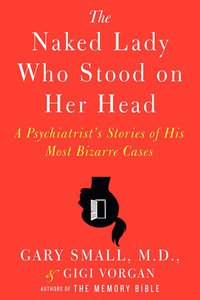
And since at least for me, the show is the most realistic I´ve seen about therapy, I thought the best thing to do was to ask an expert about it. That´s why we contacted best selling author Dr Gary Small, with his New York Times best seller The Memory Bible. Recently he launched his new book, cowritten with Gigi Vorgan, called “The Naked Lady who Stood on Her Head“.

I asked him to tell us his opinion about In Treatment and wether it was TV Hype or the Real Deal.

Dr Gary Small wrote this piece for Series And TV about HBO show In Treatment.

In Treatment:  TV Hype or the Real Deal?

As a psychiatrist, I watch this show with mixed feelings.  I’m drawn to the drama of some of the characters.  I empathize with the therapist, knowing first-hand the emotional challenges and rewards of treating difficult patients.  Sometimes I’m appalled when he crosses the line and let’s his own feelings and conflicts interfere with the treatment.  The good doctor is supposed to understand his own emotional reactions to his patients and not act on them to serve his own needs.  In the series, we’re led to believe that talking to his own therapist at the end of the week makes it all okay.  But this is therapy, not Confession, and all is not okay.

What I find most intriguing about the show, which parallels my own new book, The Naked Lady Who Stood on Her Head:  A Psychiatrist’s Stories of His Most Bizarre Cases, is that it gets inside the doctors head.  The viewer has a sense of what the therapist is thinking and going through.  Some people view therapists as wizards who can magically peer into their minds and know their deepest thoughts and mental anguish.  But that is not the case, as shown in both this series and my book.  Therapists are just people with their own emotional struggles, and part of their job is to put aside their own emotional needs in order to help their patients.

The realization that a psychiatrist or psychologist might have personal issues frightens many patients.  That’s part of the patient’s transference – they are transferring feelings they have toward other people in their lives onto the therapist.  As children, we often have this kind of magical thinking about our parents – that they are all powerful and can fix everything.  What often heals patients in therapy is gaining insight on their transference feelings.  They learn how they distort their perception of the therapist and gain perspective on how they distort their other relationships.

So is In Treatment the real deal or just TV hype? In many ways, it is as close to the real deal as scripted TV can get, which is one reason so many people are drawn to it.  But most therapists don’t cross the line and enter their patient’s personal lives.  In television and film, this has become a stereotype.  The patient often falls in love with the therapist, and the recently divorced therapist responds in kind.  The therapist meets is own needs and temporarily gratifies the patient.  The patient gains a temporary lover, but loses their doctor and the opportunity to resolve his or her conflicts.

The therapists I respect the most are those who have had personal conflicts and resolved them.  They don’t get personally involved in their patients’ transference reactions, but help them understand them.  They are often the most empathic psychotherapists because they know the pain and anguish that their patients experience.

So I am eager to see what happens this season on In Treatment. In many ways, it is the real deal.  Sometimes it makes us squirm; other times it’s a little boring.  TV, and therapy, often get that way.

Who is Dr Gary Small?

Dr. Gary Small is a professor of psychiatry and director of the UCLA Center on Aging at the Semel Institute for Neuroscience & Human Behavior. His research, supported by the National Institute of Health, has made headlines in the Wall Street Journal, New York Times, and USA Today. Scientific American magazine named him one of the world’s leading innovators in science and technology. Dr. Small lectures throughout the world and frequently appears on The Today Show, Good Morning American, PBS, and CNN. He has written five books, including The New York Times best seller, The Memory Bible.

How to buy The Naked Lady Who Stood on Her Head?

You can either buy it online at Amazon.com (both hard cover and Kindle editions), at Barnes & Noble, at Harper Collins site (In E-Book, Hard cover or audiobook formats).

More Information about In Treatment Season 3 Premiere on HBO

Multi award HBO show In Treatment is coming back Monday October 25th with back to back episodes, followed by two more back to back episodes on Tuesday October 26th. (9 and 9:30 PM)

The Naked Lady Who Stood on Her Head Book Review

the-naked-lady-who-stood-on-her-head-book-review-gary-small-gigi-vorganIf you are a TV Medical / Psychiatry Show fan like House MD, In Treatment, Mental, Grey´s Anatomy, Huff, and a large etcetera, there is a book that is a must! It appeared on bookshelves across the country on September 28th, and globally sold on Internet.

The book is called The Naked Lady Who Stood on Her Head: A Psychiatrist’s Stories of His Most Bizarre Cases and the authors are renowned psychiatrist Dr. Gary Small and his wife, Gigi Vorgan.

The Naked Lady who stood on her head is a recount of Dr. Small’s most bizarre cases, from naked headstands (hence the title: The Naked Lady who stood on her head) and hysterical blindness to fainting schoolgirls and self-amputations.

The book is written in cronological order and starts in 1978 with the first case called Sexy Stare, in which we learn that the best patient every psychiatry craves is called the YAVIS: Young, Attractive, Verbal, Intelligent and Wealthy (The S stands for $).

I had the chance to read the book since Authors on the Web folks were kind enough to send me a copy, and it took me three working days to read it completely (in working days I have less and less time to read than on weekends, of course).

If I had to say what are the best things about The Naked Lady Who Stood on Her Head, I´d list several:

Top ten things I liked about The Naked Lady Who Stood on Her Head

  • Dr Gary Small does not take an “I know it all approach” when telling the stories therefore making them much more likeable to read.
  • There is sort of a TV Episodic way of telling the stories. It takes you about 40 minutes to read a chapter, and you see the mistery at the beggining and how it unwraps and gets resolved. If you are a fan of Medical or Psychiatry TV Shows you´ll love the style.
  • The literature quality of the storytelling. It´s not a lecture from a psychiatry expert, it´s not a case study. It´s a book with great flow and written by a savvy writer (My bet is we have a lot to thank Gigi Vorgan in that department, but that´s just my guess).
  • You read, you learn. Not only reading is a good brain and imagination exercise, but also, in this book Dr Gary Small explains the technicalities and science and concepts in crystal clear paragraphs even I could fully understand!
  • Mnemotechnia: In this book Dr Gary Small tells you the mnetechnia rules he used to study different syndroms, they are not only funny, but easy to remember.
  • The Behind the Scenes: One always wonders what is the therapist thinking. Gary Small tells us that on The Naked Lady Who Stood on Her Head. And that´s refreshing. He shows psychiatrists are humans.
  • Highs and Lows, Ups and Downs: The stories are a miryad of different personalities, so each case and every story is different from the prior one. You can laugh, you can get surprised, you can even think its fiction or even you can empathize with the cases. Diversity is a plus.
  • The main story evolution: Behind the separate stories you can follow the growth of the psychiatrist himself, from his early begginings in the seventies to his becoming an expert and how he struggled to get that expertise.
  • The Big Words: I feel already smarter after reading The Naked Lady Who Stood on Her Head and I´m anxious to have conversations where I can slip in a: “Dysmorphophobia, Pseudocyesis or Psychogenic Polydipsia” comment.
  • The Flawless Harper Collins´ Edition: Nothing is better than a handbook you can actually handle. Its size is good, you can carry it on your purse or in my case, in my notebook briefcase, you can read it in the bus or subway, and the words are a very readable size you won´t get tired of reading after a few minutes.

The Naked Lady Who Stood on Her Head is a very nice book I just read, and it´s very TV related. If you like Medical or Psychiatry shows, you´ll enjoy this book.

How to buy The Naked Lady Who Stood on Her Head?

You can either buy it online at Amazon.com (both hard cover and Kindle editions), at Barnes & Noble, at Harper Collins site (In E-Book, Hard cover or audiobook formats).

Who are Dr Gary Small and Gigi Vorgan?

Dr. Gary Small is a professor of psychiatry and director of the UCLA Center on Aging at the Semel Institute for Neuroscience & Human Behavior. His research, supported by the National Institute of Health, has made headlines in the Wall Street Journal, New York Times, and USA Today. Scientific American magazine named him one of the world’s leading innovators in science and technology. Dr. Small lectures throughout the world and frequently appears on The Today Show, Good Morning American, PBS, and CNN. He has written five books, including The New York Times best seller, The Memory Bible.

Gigi Vorgan wrote, produced, and appeared in numerous feature films and television projects before teaming up with her husband, Dr. Gary Small, to co-write The Memory Bible, The Memory Prescription, The Longevity Bible, iBrain, and The Naked Lady Who Stood on Her Head. She lives in Los Angeles with Dr. Small and their two children.

Videos From Dr Gary Small talking about The Naked Lady Who Stood on Her Head

Continue reading